Physical Address
304 North Cardinal St.
Dorchester Center, MA 02124
Physical Address
304 North Cardinal St.
Dorchester Center, MA 02124
Through Diversity and Inclusion
Through Diversity and Inclusion
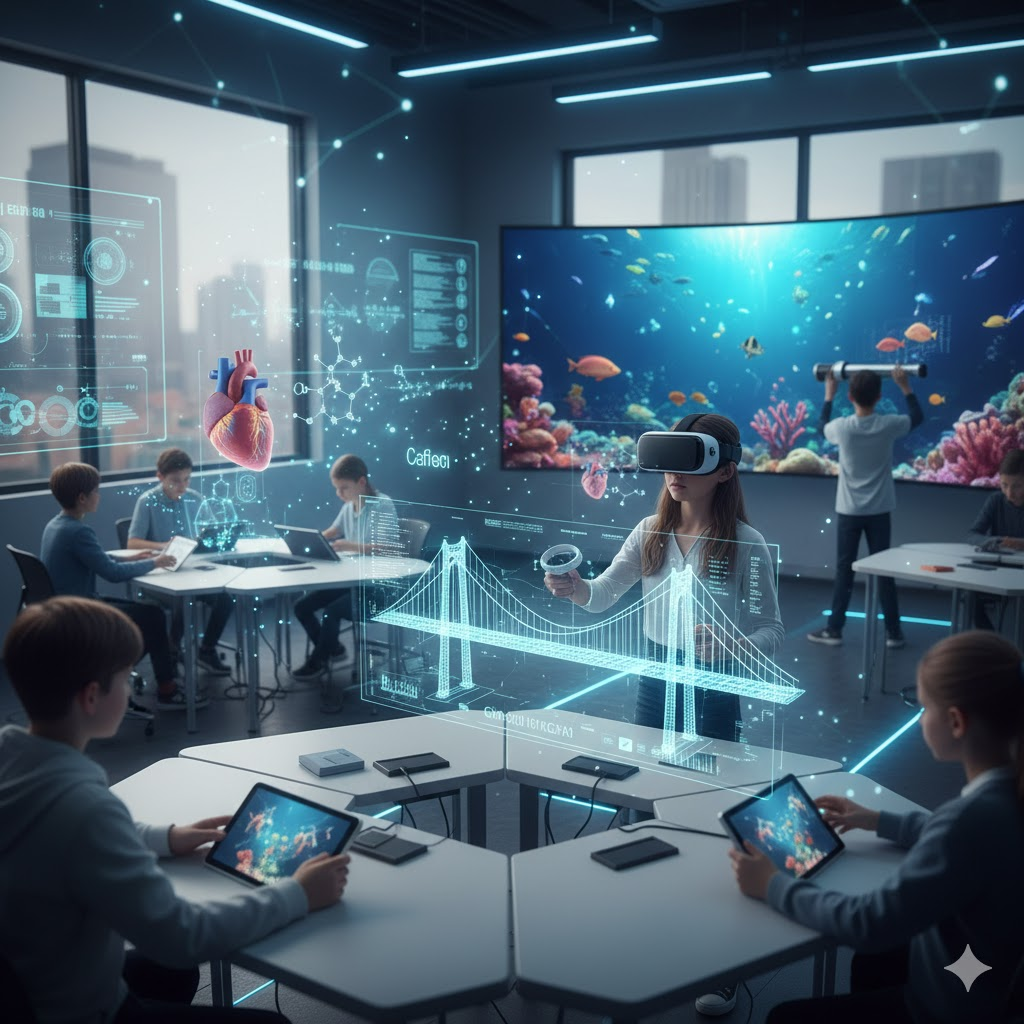
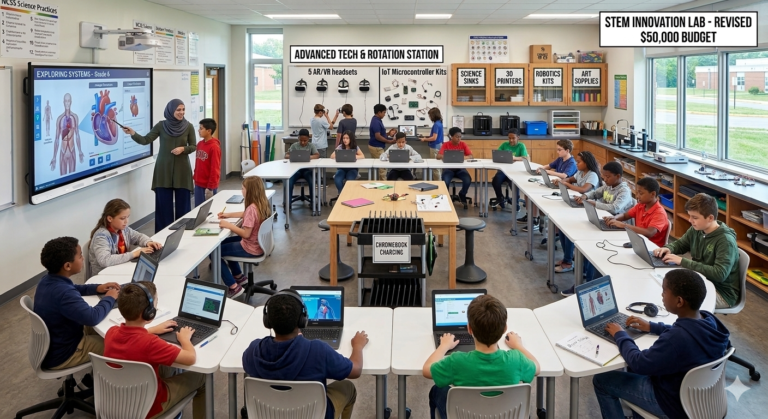
As instructional technologies continue to evolve, schools must expand learning opportunities beyond traditional instruction to prepare students for authentic science and engineering experiences. This proposal outlines the integration of Augmented Reality (AR) and Virtual Reality (VR) into an NGSS-aligned computer lab serving grades 4–8 to support inquiry, visualization, and engineering design. AR/VR technologies enable students to explore complex, often invisible scientific processes, such as body systems and physical forces, through immersive simulations that enhance conceptual understanding and engagement (Zhang & Wang, 2021). The proposal emphasizes that immersive technologies supplement—not replace—hands-on learning by providing safe environments for experimentation, virtual field experiences, and iterative engineering design cycles. Students can conduct virtual science labs, manipulate 3D models, and collaborate in shared virtual spaces to test and refine solutions before physical construction. Research shows that interactive visualization and experiential learning increase motivation and comprehension, particularly when learners actively engage with scientific models rather than static representations (Stelter & Kim, 2023; Nuanmeesri et al., 2019). Implementation includes teacher professional development, alignment with NGSS practices, rotational learning models, accessibility supports, and phased evaluation measures to ensure sustainability. Ultimately, the proposal reimagines the computer lab as a STEM innovation space where students transition from passive observers to active problem-solvers, developing collaboration, inquiry, and design-thinking skills essential for future STEM pathways.
References
Nuanmeesri, S., Kadmateekarun, P., & Poomhiran, L. (2019). Augmented reality to teach human heart anatomy and blood flow. The Turkish Online Journal of Educational Technology, 18(1), 15–24.
Stelter, A. K., & Kim, E. (2023). Looking through the virtual glasses: Exploring student experience with augmented reality in human anatomy courses. Journal of the California Dental Hygienists’ Association, 41(2), 12–19.
Zhang, Z., & Wang, W. (2021). Theory and practice of VR/AR in K–12 science education—A systematic review. Sustainability, 13(22), 12646. https://doi.org/10.3390/su132212646